Guides · Port Richey, Florida
Parks and Nature near Port Richey
Port Richey is small—about 3,200 people—but its green spaces run the length of the town, from the river mouth to the inland mobile home parks.
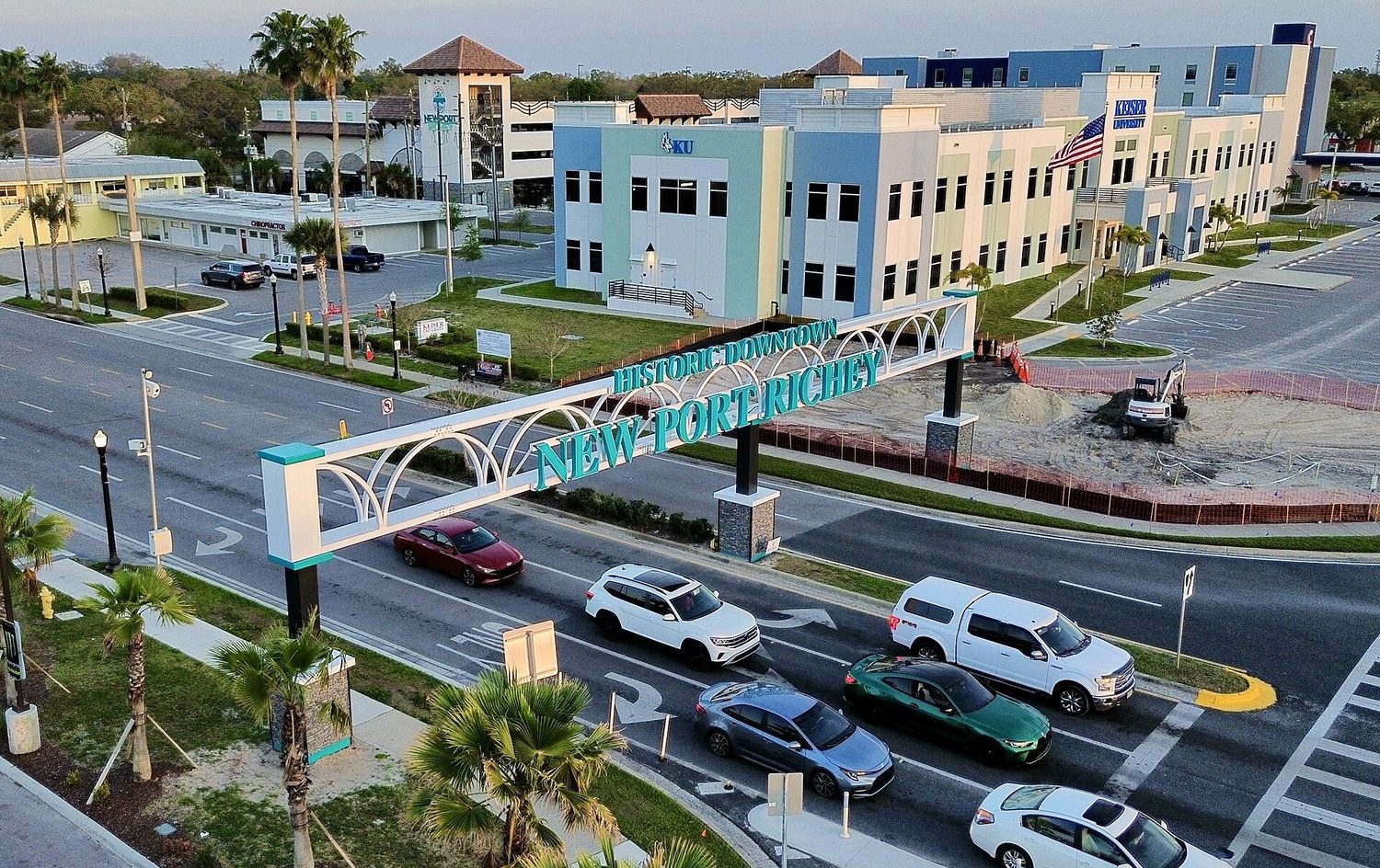
The River Anchor
The Pithlachascotee made this place. Aaron M. Richey settled at its mouth in 1883, opened a post office the next year, and the town grew from there. The city still calls itself On the Beautiful Pithlachascotee River. That river is why Werner-Boyce Salt Springs State Park exists on US-19. It is the largest green space here, rated 4.5 from nearly 1,500 reviews, and it holds the coastline north of town. You go for the springs, the mangroves, the quiet. It is not a beach park; it is a tidal park, and it rewards people who walk slowly.
Closer to the old settlement, Port Richey Waterfront Park sits on Old Post Road, right where the river bends. Rated 4.5 from 682 reviews, it is the working waterfront: fishing, launches, benches. The Dog Park shares that address, a small fenced area with its own 4.3 rating from just 25 reviews. If you have a dog, you will likely end up there. If you do not, you will still use the main park for the view.
The Neighborhood Parks
Port Richey is a town of subdivisions, and each one seems to have a patch of green. Oelsner Park on Miller Bayou Drive is the quiet one—4.4 from 225 reviews, mostly locals, mostly shade. Brasher Park on Koons Drive scores 4.5 from 163 reviews. It is small, but it has ball fields and a playground. Pinehill Park on Pine Hill Road is the best-rated of the small ones at 4.6, though only 146 people have bothered to review it. That tells you something: it is for the neighborhood, not for the tourists.
Lake Lisa Park on Maplehurst Drive is the outlier. Rated 4.2 from 836 reviews, it is the most reviewed spot after the state park and the trampoline park. It is a lakefront park, which matters here because most of the water access is river or gulf. The lake is calmer. People bring kayaks. It fills up on weekends.
The Odd Ones Out
Not everything listed under "parks and nature" is a park. Urban Air Trampoline and Adventure Park on US-19 is exactly what it sounds like—an indoor trampoline complex, rated 4.0 from 1,277 reviews. It is not nature unless you count the physics of bouncing. But it is the second-most-reviewed attraction in this category, and for families with kids under twelve, it is often the actual destination. Port Richey is a small town; you take what works.
Then there are the manufactured home communities. Shalimar Village on Stone Road (3.7, 116 reviews), Suncoast Gateway on Ridge Road (4.2, 94 reviews), Senate Manor Estates on Clemens Boulevard (4.3, 92 reviews), and Holiday Mobile Home Park on December Drive (3.1, 80 reviews) all show up on mapping services as "parks." They are not. They are residential parks—places where people live, often retirees. The town's median age is 49.4 years, and 265 of the 1,857 housing units are held for seasonal or recreational use. These communities are part of that picture. They have green lawns and quiet streets, but you should not wander into them for a picnic. They are homes.
The same goes for Dog Enjoyment Center on Ridge Road (3.2, 22 reviews) and Curb Appeal Curbing, Inc. on Leaning Oak Drive (4.5, 49 reviews). One is a small dog run, the other is a concrete curbing business that got miscategorized. Ignore both unless you have a specific need.
What You Should Actually Do
Start at the river. Werner-Boyce Salt Springs State Park is the reason to drive to Port Richey for nature. It is raw, undeveloped in the good way, and big enough that you can lose the crowd. Then drive down to Port Richey Waterfront Park and watch the river move. If you have kids, hit Lake Lisa Park for the lake and the grass. If it is raining, Urban Air is the fallback.
Skip the rest. The mobile home parks are not attractions, and the miscategorized businesses are just data noise. Port Richey does not have a lot of curated nature. It has a river, a couple of state-managed acres, and a handful of neighborhood parks that serve the people who live here. That is enough. The town is not a destination for nature tourism; it is a place where the river is the main feature, and the parks are just places to stand near it.
Johnny Cash lived here from 1979 to 2002. You will not find a museum or a marker. The river was here before him, and it will be here after the rest of us. That is the point of this town. Go to the water. That is all you need to do.
Every business named above is one we hold a listing for, and every date traces to a source on our sources page. We do not describe menus, interiors or service we have not verified. Details change — confirm before you travel.