Guides · Port Richey, Florida
Why Port Richey Is Where It Is
Port Richey’s name tells you almost everything. The rest is on the water.
The Pithlachascotee River is the reason any of this exists. In 1883, Aaron M. Richey came down from St. Joseph, Missouri, and settled near the river’s mouth. He opened a post office on 9 July 1884, and the settlement took his name. The river made the place; the city still carries the motto On the Beautiful Pithlachascotee River.
Incorporation came late and grudgingly. The city formally incorporated in 1925, only after New Port Richey had incorporated the year before. That is the whole story of Port Richey in one sentence: a small river town that had to be prompted into becoming a municipality. It remains small. The census counts 3,229 people, with a median age of 49.4 years. This is not a young town, and it does not pretend to be.
The River as Address
The river is not decoration here. It is the original street, the first highway, the reason the post office went in where it did. Homes along the Pithlachascotee are not just scenic; they are positioned. Of the 1,857 total housing units in the city, 265 are held for seasonal or recreational use. That is roughly one in seven homes. People come here for the water, and they keep coming back to it.
Johnny Cash kept a house on the Pithlachascotee here from 1979 until 2002. He lived on the river for twenty-three years. That is a fact about the place, not a marketing hook. The river held him the way it holds everyone else who settles at its edge.
The Numbers Beneath the Surface
The census figures are honest, and they are not the numbers of a boomtown. The median household income is $45,435. The median home value is $256,500. Median gross rent runs $982 a month. The unemployment rate sits at 7.4 percent. These are mid-range Florida numbers, neither destitute nor flush. The city is affordable in a state that has stopped being affordable.
Education levels are decent: 29.9 percent of residents hold a bachelor’s degree or higher. That is not a college town figure, but it is respectable. The housing stock tells a more complicated story. There are 397 vacant housing units out of 1,857 total. That is a vacancy rate above 21 percent, a reminder that this is a place with turnover, with seasonal rhythms, with homes that sit empty between visitors.
What the River Does Not Do
The river does not make the city rich. It does not bring the jobs. What it does is give Port Richey a center of gravity that does not depend on the retail strip or the highway. The city’s identity is fixed to the water in a way that few Florida towns can claim. The name is the proof. Pithlachascotee is a mouthful; Port Richey is a shortening that stuck. Everyone here knows the full name, and they shorten it the way you shorten the name of a neighbor.
The river is also a boundary. It separates the city from New Port Richey, the larger, flashier neighbor that incorporated first. The two towns share the river, but not the temperament. Port Richey is the quieter bank.
A Mall on the Edge
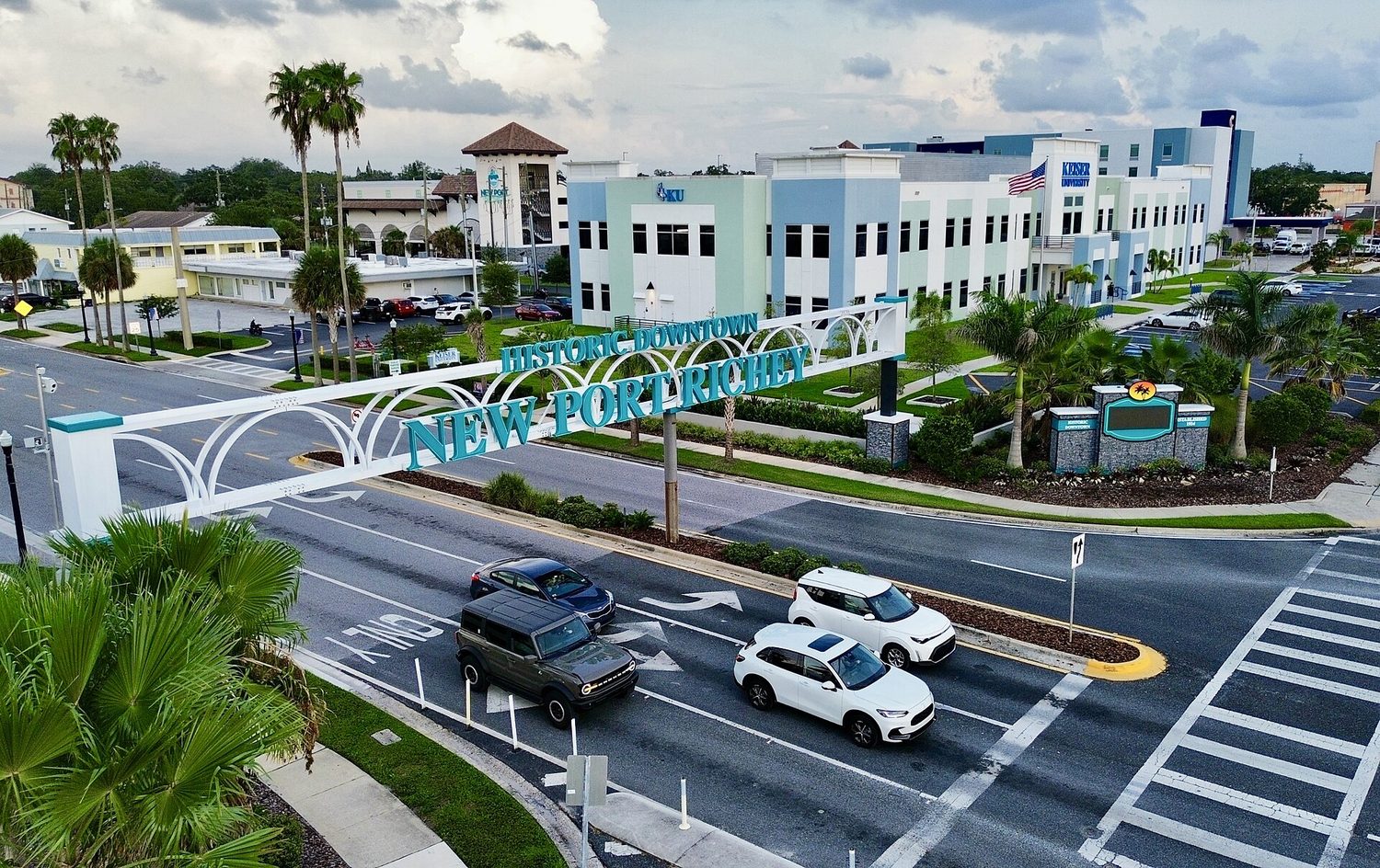
Just north of the city sits Gulf View Square, the enclosed shopping mall. It is not in Port Richey, but it is close enough to matter. For a town of 3,229 people, the regional mall is the nearest thing to a downtown commercial district. The city itself has no real grid of storefronts, no courthouse square. The mall does the work of a main street, even if it sits outside the city limits.
That is the shape of the place: a river town with no conventional town center, a city that incorporated out of rivalry, a community of 3,229 people with 397 empty houses and 265 seasonal ones. It is not a destination. It is a location. The river fixed it there, and the river has kept it there.
The Motto Is the Method
The city motto is On the Beautiful Pithlachascotee River. That is not aspirational. It is descriptive. Port Richey did not choose a slogan about opportunity or growth. It chose a statement of position. The river is the fact, and the city is the footnote.
Aaron M. Richey arrived in 1883. He opened his post office in 1884. The city incorporated in 1925. Johnny Cash arrived in 1979 and left in 2002. Those are the dates that matter. Everything else is the river, still doing what it has always done.
Port Richey is where it is because the water was there first. The rest was just a matter of someone showing up, opening a mailbox, and staying long enough to give the place a name.
Every business named above is one we hold a listing for, and every date traces to a source on our sources page. We do not describe menus, interiors or service we have not verified. Details change — confirm before you travel.